

The US GENIUS Act 2025 marks a pivotal shift in stablecoin regulation 2025, transforming digital dollars from speculative tokens into fortified pillars of the financial ecosystem. By enforcing stringent reserves, KYC mandates, licensing protocols, and oversight mechanisms, this legislation bridges the gap between crypto innovation and traditional finance safeguards. Issuers now face a strategic imperative: adapt swiftly or risk obsolescence in a market demanding unyielding stability.
Securing Stability with 1: 1 Reserves Backing
At the core of the GENIUS Act lies the 1: 1 Reserves Backing requirement, compelling permitted payment stablecoin issuers to maintain reserves for outstanding payment stablecoins on at least a one-to-one basis using high-quality liquid assets like cash and short-term Treasuries. This isn't mere compliance; it's a resilience engine. Gone are the days of fractional reserves or algorithmic gambles. Instead, issuers must anchor every stablecoin with U. S. dollars, short-term U. S. Treasury securities, or Federal Reserve bank reserves, explicitly barring undercollateralized models that previously eroded trust.
Transparency amplifies this pillar. Monthly reserve reports, backed by independent third-party attestations, and annual audits by U. S. -registered public accounting firms ensure verifiable solvency. Reserves demand custodial rigor, held by federally or state-approved entities, with rehypothecation largely prohibited except for narrow liquidity maneuvers like short-term repo agreements on Treasury bills via central counterparties. In insolvency scenarios, stablecoin holders gain priority claims on these assets, a consumer shield that strategically positions compliant issuers as market leaders.
Key GENIUS Act 2025 Reserve Requirements
| Requirement | Details |
|---|---|
| 1:1 Backing | Stablecoins must be fully backed by high-quality liquid assets on a one-to-one basis, including U.S. dollars, short-term U.S. Treasury securities, and Federal Reserve bank reserves. Excludes algorithmic or undercollateralized models. |
| Transparency and Audits | Issuers must publish monthly reserve reports with independent third-party attestations and undergo annual audits by U.S.-registered public accounting firms. |
| Custody Standards | Reserves must be held by entities subject to federal or approved state regulatory oversight, ensuring safekeeping. |
| No Rehypothecation | Prohibited, except under specific conditions to meet liquidity needs, such as short-term repurchase agreements on Treasury bills cleared by an approved central counterparty. |
| Priority Claims in Insolvency | Stablecoin holders have priority claims on reserve assets in the event of issuer insolvency. |
This framework doesn't stifle innovation; it channels it. Forward-thinking issuers can leverage these rules to build investor confidence, much like how Treasury yields once stabilized forex markets during my trading days.
Charting the Path to Issuer Licensing
Issuer Licensing under the GENIUS Act demands that entities obtain federal or state licensing as permitted payment stablecoin issuers, treated as financial institutions with tailored approval processes. Scale dictates the arena: those surpassing $10 billion in outstanding stablecoins fall under federal purview via the Office of the Comptroller of the Currency (OCC) and Federal Reserve. Smaller players, under that threshold, can pursue state licensing if frameworks mirror federal rigor, fostering a dual-track system that rewards adaptive strategies.
Foreign issuers eyeing U. S. customers must register with the OCC and demonstrate equivalent standards, leveling the global playing field. This licensing isn't a rubber stamp; it integrates capital, liquidity, and risk management rules calibrated by regulators. Enforcement ramps up in Q3 2026, urging issuers to engage legal teams now for seamless transitions. Think of it as a strategic moat: licensed issuers gain legitimacy, unlocking partnerships with banks and payment rails that unlicensed rivals can only dream of.
Source: Insights from Latham and Watkins on GENIUS Act adoption highlight the need for early compliance engagement.
By aligning with these processes, issuers don't just comply; they innovate within bounds, much like hybrid portfolios that blend forex stability with crypto upside.
Fortifying Transactions Through KYC/CIP Compliance
The GENIUS Act elevates KYC/CIP Compliance, requiring stablecoin issuers to implement customer identification programs (CIP) and KYC procedures under the Bank Secrecy Act (BSA) for all stablecoin users and transactions. Classified as financial institutions, issuers must verify identities, screen for sanctions, monitor for suspicious activity, and report to authorities, reshaping AML landscapes.
This isn't bureaucratic overhead; it's a strategic filter against illicit flows, enhancing stablecoin viability for mainstream adoption. Robust transaction monitoring catches anomalies in real-time, while CIP ensures onboarding rigor, from individual verifications to corporate beneficial ownership disclosures. In my cross-asset experience, such controls mirror commodity trading desks' success in volatile markets, turning compliance into a competitive edge.
Integrating these with reserves and licensing creates a trifecta of trust, but oversight ties it together. Regulatory Oversight mandates adherence to ongoing supervision by Treasury, Federal Reserve, and state regulators, enforcing capital, liquidity, and risk management standards tailored to stablecoin dynamics.
Regulators will tailor these standards to stablecoin risks, blending forex-like liquidity buffers with crypto's velocity demands. Treasury leads coordination, ensuring federal-state harmony while preventing regulatory arbitrage. This oversight evolves dynamically, with rulemaking notices already signaling harmonized custody and audit protocols.
Ongoing Regulatory Oversight
The GENIUS Act's Regulatory Oversight pillar demands unwavering adherence to supervision by the Treasury, Federal Reserve, and state regulators, embedding capital, liquidity, and risk management standards into daily operations. Larger issuers face Federal Reserve stress tests akin to bank holding companies, while state-supervised entities submit equivalent reports. This isn't passive monitoring; it's proactive intervention, with powers to enforce corrective actions or revoke licenses for non-compliance.
Strategic issuers will view this as an opportunity to refine operations. Capital rules might require buffers scaling with issuance volume, liquidity mandates ensure instant redemptions even in stress, and risk frameworks address smart contract vulnerabilities or market shocks. Drawing from my commodity trading playbook, these mirror position limits that tamed volatility, now applied to digital assets. Early adopters gain first-mover advantage, signaling robustness to institutional partners wary of past collapses.
GENIUS Act 2025 Core Compliance Matrix
| Compliance Area | Description | Key Requirements | Oversight & Thresholds |
|---|---|---|---|
| Reserves Backing (Assets & Audits) | Maintain reserves backing outstanding payment stablecoins on at least a 1:1 basis | High-quality liquid assets (U.S. dollars, short-term U.S. Treasury securities, Federal Reserve bank reserves); Monthly reserve reports with independent third-party attestations; Annual audits by U.S.-registered public accounting firms; Reserves held in custody by regulated entities; Prohibition on rehypothecation (limited exceptions for liquidity) | All issuers; Treasury, OCC, Federal Reserve |
| KYC/CIP (BSA Verification & Monitoring) | Implement customer identification programs (CIP) and KYC procedures as financial institutions under the Bank Secrecy Act (BSA) | Verify customer identities; Monitor transactions for suspicious activity; Report to authorities; Sanctions screening | All issuers and transactions; FinCEN, Treasury |
| Issuer Licensing (Federal/State Thresholds) | Obtain federal or state licensing as a permitted payment stablecoin issuer | Federal oversight (OCC, Federal Reserve) for issuers exceeding $10 billion in outstanding stablecoins; State supervision for under $10 billion if framework substantially similar to federal standards; Foreign issuers must register with OCC if comparable standards met | OCC (federal licensing and foreign registration), Federal Reserve, State Regulators |
| Regulatory Oversight (Capital/Liquidity/Risk Standards) | Adhere to tailored capital, liquidity, and risk management rules with ongoing supervision | Capital/liquidity requirements; Risk management standards; Consumer protections (e.g., priority claims on reserves in insolvency); Enforcement starting Q3 2026 | Treasury, Federal Reserve, OCC, State Regulators |
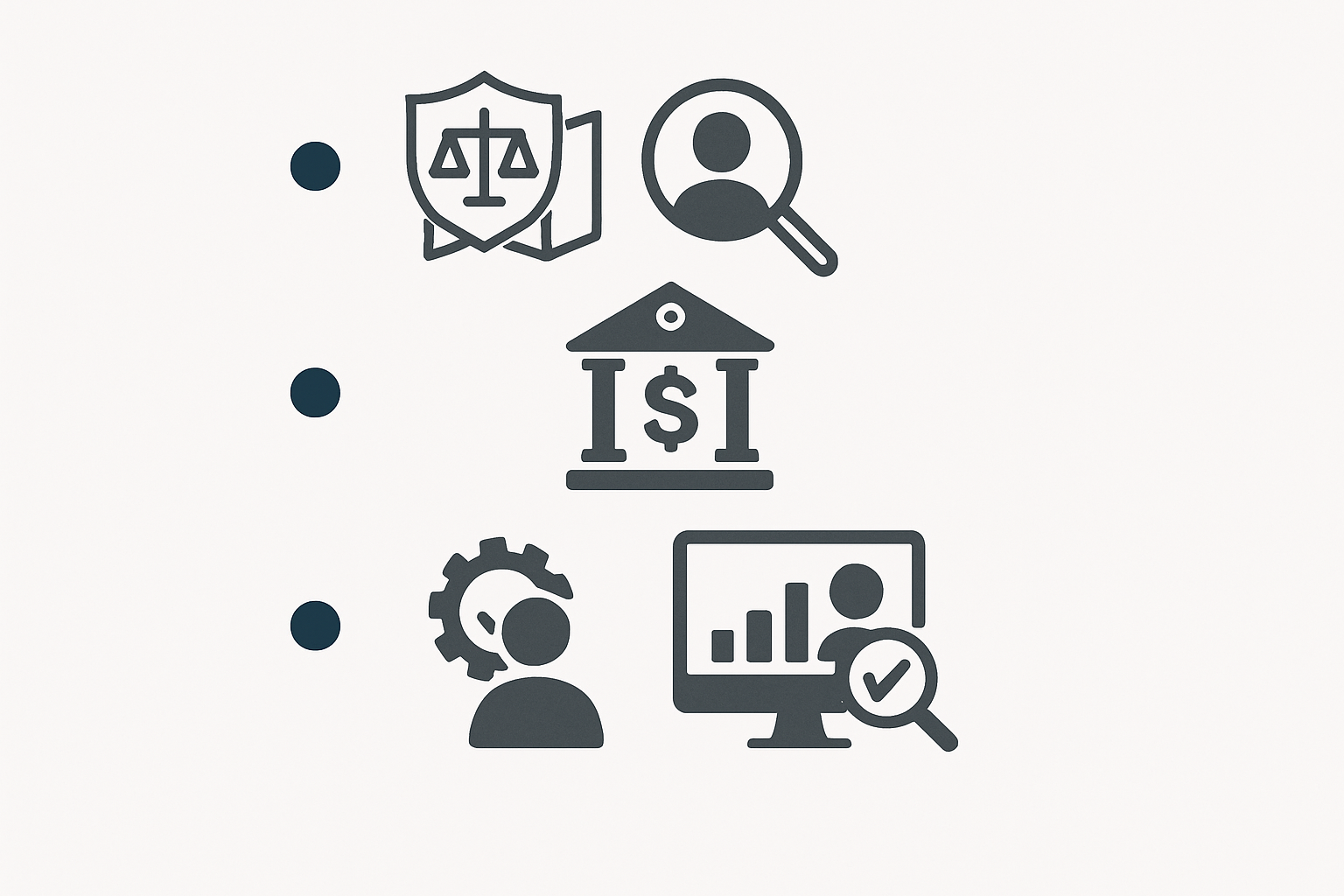
Layered together, these four pillars provides 1: 1 Reserves Backing, KYC/CIP Compliance, Issuer Licensing, and Regulatory Oversight: form an unbreakable compliance fortress. Issuers mastering them unlock seamless integration with payment networks, cross-border flows, and even central bank digital currency pilots.
For stablecoin issuer licensing USA aspirants, the path forward demands hybrid teams: lawyers versed in BSA protocols, quants modeling liquidity cascades, and strategists plotting growth under $10 billion caps. Foreign players, register via OCC to tap U. S. liquidity pools without full domestication. Non-compliance? Expect enforcement waves post-Q3 2026, sidelining laggards.
Innovation thrives under guardrails; the GENIUS Act proves resilience stems from disciplined adaptation.
U. S. stablecoin reserves now rival sovereign debt in scrutiny, GENIUS Act KYC requirements fortify against shadows, and oversight ensures evolution matches adoption pace. This framework doesn't just regulate, it catalyzes stablecoin regulation 2025 into a global benchmark, empowering issuers to bridge fiat rails with blockchain velocity. Forward-thinkers positioning now will dominate tomorrow's digital economy.
Navigate these rules with precision: audit your reserves today, blueprint your CIP tomorrow, license strategically, and oversee relentlessly. The market rewards the prepared.



No comments yet. Be the first to share your thoughts!