
Stablecoin laws 2026: the regulatory shift
Stablecoin regulation in 2026 is defined by a bifurcated landscape: the US GENIUS Act establishes a federal baseline for payment stablecoins, while the EU’s MiCA regulation provides a comprehensive framework for asset-referenced and e-money tokens. For issuers, compliance is no longer optional; it requires strict reserve backing, rigorous auditing, and adherence to anti-money laundering (AML) protocols.
US framework: the GENIUS Act requirements
The GENIUS Act establishes the first comprehensive federal framework for payment stablecoins, directing the Treasury Department to regulate Permitted Payment Stablecoin Issuers (PPSIs) as financial institutions under the Bank Secrecy Act. This classification imposes strict anti-money laundering obligations and requires issuers to maintain reserves that are fully backed on a one-to-one basis.
Reserve composition is tightly controlled. Issuers must hold reserves in specified low-risk assets, primarily US dollars, federal reserve notes, and funds held at regulated institutions. These reserves must be segregated from the issuer’s operational funds to protect stablecoin holders. The FDIC has clarified that deposits held as reserves backing a payment stablecoin are not insured to payment stablecoin holders, meaning the guarantee comes from the asset backing itself, not government deposit insurance.
Reporting requirements ensure transparency. PPSIs must provide regular attestations or audits of their reserve holdings to demonstrate compliance. This includes detailed disclosures on the composition of reserves, the identity of custodians, and any changes in the issuer’s financial structure. These reports are subject to review by federal regulators to prevent systemic risk and ensure market integrity.
For issuers, this means building robust compliance infrastructure from the ground up. The law requires PPSIs to implement know-your-customer (KYC) and anti-money laundering (AML) programs comparable to those required of traditional banks. Failure to meet these standards can result in significant penalties or revocation of the issuer’s permitted status, effectively shutting down their ability to operate in the US market.
State options for smaller issuers
The GENIUS Act established a dual-track regulatory system, creating a distinct compliance path for non-bank issuers managing less than $10 billion in outstanding stablecoins. This threshold separates smaller entities from the major financial institutions subject to federal banking oversight, allowing them to operate under state-level frameworks.
Under this provision, smaller issuers can choose to register with their home state regulator rather than pursuing federal banking charters. This state option provides a tailored compliance structure that aligns with the issuer's operational scale. The law ensures that these entities still meet rigorous reserve requirements and consumer protection standards, but through a regulatory channel designed for regional or niche market participants.
This approach acknowledges that a one-size-fits-all federal mandate may be disproportionate for smaller issuers. By permitting state-level registration, the legislation encourages innovation and market entry for smaller players while maintaining the systemic integrity of the payment stablecoin ecosystem. Issuers must ensure their chosen state framework meets the federal baseline standards set by the Act.
The dual-track system effectively creates a tiered regulatory environment. Large issuers face federal banking supervision, while smaller non-bank issuers navigate state-level compliance. This distinction allows regulators to focus resources on systemically important entities while providing a clear, accessible path for smaller market participants to operate legally.
EU MiCA implementation in 2026
The European Union’s Markets in Crypto-Assets (MiCA) regulation has fully transitioned from legislative text to operational reality in 2026. For issuers of asset-referenced tokens (ARTs) and e-money tokens (EMTs), compliance is no longer optional. The framework establishes strict capital requirements, reserve management rules, and governance standards that apply across all 27 member states.
MiCA divides stablecoins into two categories with distinct obligations. ARTs are pegged to a basket of assets or a single fiat currency, while EMTs represent a claim on fiat currency. Both must maintain reserves that are fully backed, segregated, and regularly audited. The European Securities and Markets Authority (ESMA) and national competent authorities now oversee these entities, ensuring that token issuers do not pose systemic risks to the financial system.
To understand how EU rules compare to emerging frameworks elsewhere, consider the reserve requirements under the EU’s MiCA regulation versus the US GENIUS Act. The table below highlights the structural differences in reserve composition and oversight.
| Feature | EU MiCA (2026) | US GENIUS Act |
|---|---|---|
| Reserve Assets | High-quality liquid assets (HQLA), cash, or equivalent | US dollars, Federal Reserve notes, or insured deposits |
| Segregation | Strict segregation from issuer’s own assets | One-to-one backing required, segregated accounts |
| Oversight Body | National Competent Authorities + ESMA | Federal Trade Commission + OCC/Fed |
| Cross-Border Scope | Single passport across 27 EU states | Federal preemption of state laws |
Compliance costs remain significant, particularly for smaller issuers who must invest in legal infrastructure and regular audits. However, the clarity provided by MiCA has encouraged institutional adoption, as banks and payment providers can now operate with regulatory certainty. As global stablecoin regulation continues to reshape payments, the EU’s approach serves as a benchmark for transparency and consumer protection.
Issuer compliance steps
The legal framework for stablecoins has shifted from voluntary guidelines to mandatory federal oversight. Issuers must now treat compliance as a core operational function rather than an afterthought. The GENIUS Act establishes the baseline requirements for permitted payment stablecoin issuers (PPSIs), mandating strict reserve backing and anti-money laundering (AML) protocols.
Under the GENIUS Act, reserves must back outstanding stablecoins on a one-to-one basis. Permissible assets are limited to US dollars, federal reserve notes, and funds held at regulated institutions. Issuers must undergo regular, independent audits to verify that these reserves are fully segregated from corporate operating funds. Failure to maintain these reserves can result in immediate cease-and-desist orders.

Operating without a license is no longer an option for payment stablecoins. Issuers must apply for permission through the appropriate federal banking regulators or the Consumer Financial Protection Bureau (CFPB), depending on the specific structure of the stablecoin. The OCC has released a Notice of Proposed Rulemaking to clarify the examination procedures for these applications. Issuers should prepare detailed capital adequacy plans and operational resilience reports before submission.
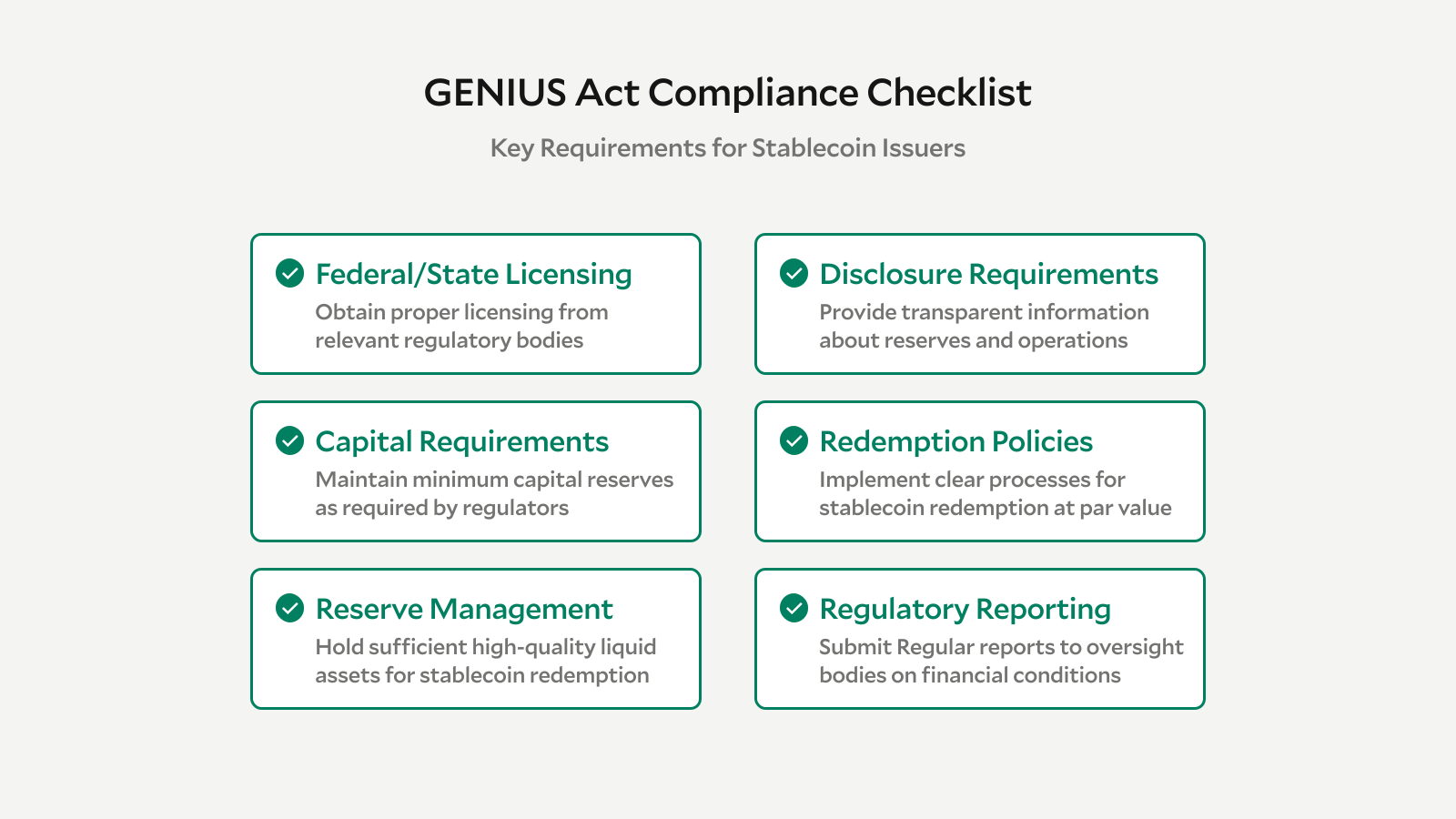
The Treasury Department has directed that PPSIs be treated as financial institutions under the Bank Secrecy Act. This requires robust reporting structures, including Suspicious Activity Reports (SARs) and Currency Transaction Reports (CTRs). Issuers must implement Know Your Customer (KYC) protocols that meet federal standards, ensuring that every wallet interaction is traceable to a verified identity. Regular reporting to federal authorities is mandatory to maintain compliance status.
No comments yet. Be the first to share your thoughts!