
With the full implementation of the EU’s Markets in Crypto-Assets Regulation (MiCA) in December 2024, the regulatory landscape for stablecoins in Europe has been fundamentally transformed. MiCA’s clear-cut categorization of stablecoins as either asset-referenced tokens (ARTs) or electronic money tokens (EMTs) is reshaping compliance strategies for issuers, exchanges, and institutional investors heading into 2025. For legal professionals and crypto market participants, understanding these new requirements is no longer optional, it’s a matter of survival in a rapidly consolidating market.

MiCA Stablecoin Compliance: Core Requirements for 2025
MiCA’s framework introduces a rigorous licensing regime that demands more than just regulatory box-ticking. Stablecoin issuers must now secure authorization as an Electronic Money Institution (EMI) or recognized crypto-asset issuer. This process involves meeting substantial capital thresholds, implementing robust governance structures, and adhering to strict anti-money laundering (AML) protocols. The days of informal token launches are over; only entities with deep compliance infrastructure can survive.
One of MiCA’s most disruptive requirements is its mandate for 1: 1 reserve backing using highly liquid assets. Every stablecoin must be fully redeemable at par value on demand, a direct response to past insolvency scares and algorithmic failures. Regular audits and transparent reserve disclosures are now mandatory, with the European Securities and Markets Authority (ESMA) empowered to enforce these standards aggressively.
Another key provision is the interest prohibition: MiCA bans issuers from paying interest on stablecoin holdings. This move decisively separates stablecoins from traditional deposit accounts, reducing systemic risk but also limiting yield opportunities for holders.
The End of Regulatory Arbitrage: Non-EU Issuers Face Tough Choices
For non-EU stablecoin issuers, MiCA has closed off the era of regulatory arbitrage. Any issuer seeking access to EU markets must establish a legal entity within the bloc and comply fully with MiCA’s requirements. The impact has already been felt: major exchanges like Coinbase delisted Tether’s USDT in December 2024 due to its non-compliance with MiCA standards. Meanwhile, compliant tokens such as Circle’s USDC and EURC have seen institutional inflows surge as they fill the vacuum left by delisted competitors.
This shift is not just about paperwork; it reflects a profound market realignment toward regulated liquidity pools and euro-denominated digital assets. For more on how euro-based stablecoins are gaining ground against USD rivals under MiCA, see this analysis.
Double Licensing Headaches: Overlap with PSD2
A major compliance hurdle emerged in June 2025 when the European Banking Authority clarified that custody and transfer of stablecoins fall under both MiCA and Payment Services Directive (PSD2). This means firms may need two separate licenses, one under each regime, effectively doubling their compliance costs and administrative complexity. Industry leaders have warned that this dual burden could stifle innovation and slow adoption rates for euro-denominated stablecoins unless further regulatory harmonization occurs.
The upshot? As we move into 2025, only well-capitalized players with sophisticated legal teams will be able to navigate this dual-licensing minefield efficiently. Smaller projects may be forced out or acquired by larger entities looking to consolidate their foothold in the newly regulated EU market.
Market dynamics are already reflecting these regulatory pressures. By August 2025, just 15 stablecoins, including Circle’s USDC and EURC, secured MiCA compliance, while legacy tokens like Tether’s USDT were sidelined from most major EU exchanges. The result is a leaner, more transparent stablecoin ecosystem that favors regulated liquidity and institutional capital. For investors and trading desks, this translates to higher confidence in on-chain euro liquidity but less variety in risk profiles.
Key MiCA vs. Non-MiCA Stablecoin Differences (EU, 2025)
- Authorization & Licensing: MiCA-compliant stablecoins must be issued by authorized Electronic Money Institutions (EMIs) or Crypto-Asset Issuers, meeting strict capital, governance, and AML requirements. Non-compliant coins lack this regulatory oversight, increasing consumer risk.

- Reserve Backing: MiCA mandates 1:1 reserve backing with highly liquid assets for all compliant stablecoins, ensuring full redeemability at par value. Non-compliant stablecoins may use less transparent or riskier reserve structures.
- Transparency & Auditing: MiCA-compliant issuers must provide regular, independent audits and transparent reporting of reserves. Non-compliant coins often lack mandatory disclosures, making financial health harder to verify.
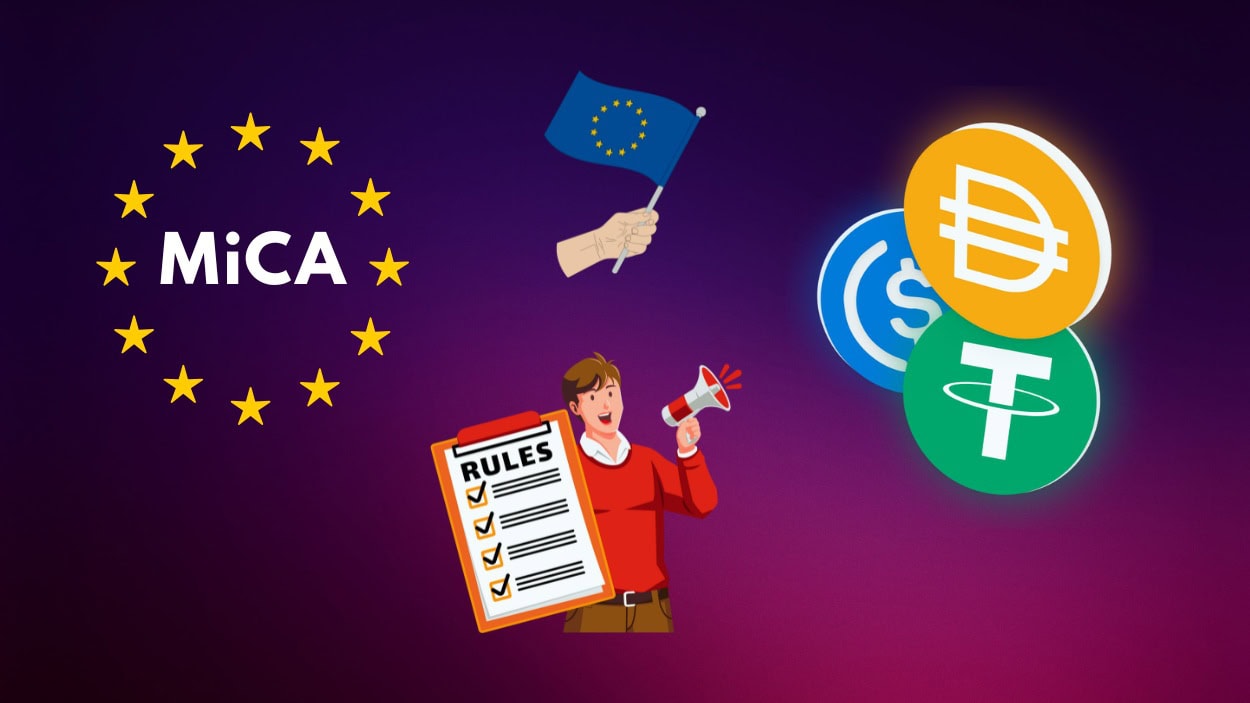
- Interest Prohibition: MiCA prohibits stablecoin issuers from offering interest on holdings, clearly distinguishing them from deposit products. Non-compliant issuers may offer interest, exposing users to additional risks.

- Market Access & Exchange Listings: Only MiCA-compliant stablecoins (e.g., Circle's USDC, EURC) remain listed on major EU exchanges. Non-compliant coins like Tether's USDT have been delisted (e.g., by Coinbase in December 2024).

- Dual Regulatory Burden: MiCA-compliant issuers may also need a PSD2 payment license for custody and transfer services, increasing compliance complexity. Non-compliant issuers typically do not meet either set of requirements.
Despite these advances, the overlap between MiCA and PSD2 remains a source of friction. Legal teams are grappling with divergent reporting standards, conflicting audit schedules, and uncertainty around cross-border transfers within the EU. The European Commission has signaled possible clarifications ahead of the July 2026 transition deadline for Crypto-Asset Service Providers (CASPs), but until then, market participants must remain agile and over-provisioned on compliance resources.
Looking Ahead: Strategic Shifts and Regulatory Outlook
MiCA’s impact is twofold: it brings much-needed clarity to stablecoin issuance while raising the bar for entry, effectively institutionalizing the sector. This new normal is already influencing global regulatory convergence. For example, there’s growing alignment between MiCA and the US GENIUS Act, especially around reserve requirements and consumer disclosures. However, as outlined in this detailed comparison, key divergences remain that cross-border issuers can’t ignore.
For legal professionals advising clients or structuring new products, staying ahead means mapping out licensing timelines early, budgeting for dual compliance regimes (MiCA and PSD2), and monitoring ESMA guidance closely. Expect further technical standards by late 2025 as regulators address edge cases like algorithmic stablecoins or DeFi integrations.
The bottom line: The era of unregulated euro stablecoins is over. MiCA has reset expectations for transparency, reserve management, and consumer protection across the European market. While regulatory overlap with PSD2 remains a sticking point, those who adapt quickly will capture outsized opportunities as compliant euro-denominated stablecoins become foundational to EU digital finance infrastructure.




No comments yet. Be the first to share your thoughts!