
The GENIUS Act framework explained
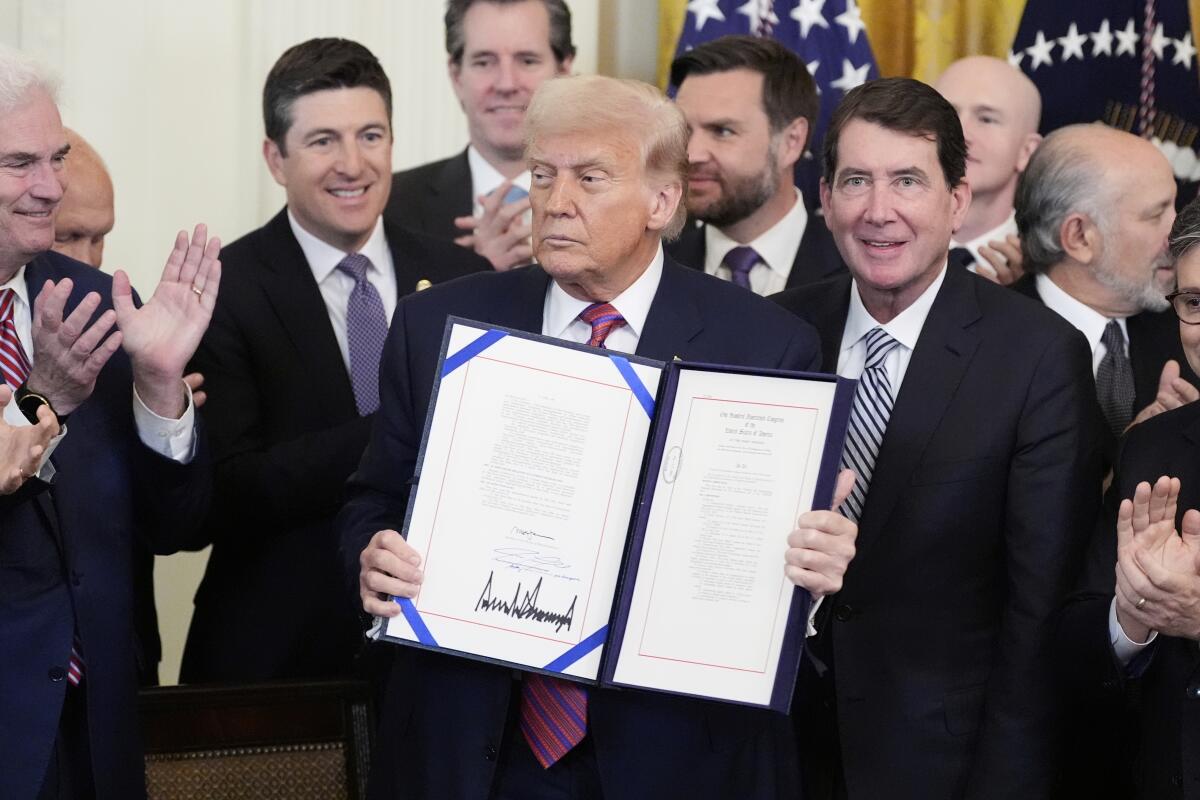
The GENIUS Act marks a definitive shift in the regulatory landscape, moving stablecoins from the periphery of crypto experimentation into the core of U.S. financial infrastructure. Enacted on July 18, 2025, the law establishes the first comprehensive federal framework for payment stablecoin activities, replacing a patchwork of state-level mandates with a unified national standard [src-serp-1]. This legislative move signals that payment stablecoins are no longer viewed as speculative assets, but as critical components of the broader financial system.
For issuers of major stablecoins like USDC and USDT, the compliance timeline is tight. The Act’s effective date is triggered by the earlier of 18 months after enactment or 120 days after the primary Federal Register notice is published [src-serp-2]. With the Treasury Department already proposing rules to implement these directives, the window for operational adjustment is narrowing [src-serp-4]. Issuers must prepare for a regime where payment stablecoin issuers are treated as financial institutions for Bank Secrecy Act purposes, imposing strict anti-money laundering obligations.
The core compliance requirement is structural: issuers must maintain reserves backing outstanding stablecoins on a strict one-to-one basis. These reserves are not arbitrary; they are limited to specified assets, including U.S. dollars, Federal Reserve notes, and funds held at insured or regulated institutions [src-serp-2]. This reserve mandate is designed to eliminate the fractional reserve practices that have historically plagued the industry, ensuring that stablecoins function as true digital dollars rather than leveraged bets.
The market has already begun to price in this regulatory clarity. As the 2026 Stablecoin Momentum Report notes, stablecoins have crossed a critical threshold, moving from niche experimentation into essential financial plumbing [src-serp-1]. This transition is not merely theoretical; it is reflected in the underlying asset performance that drives the stablecoin ecosystem.
Reserve requirements and asset rules
The GENIUS Act establishes a rigid framework for what constitutes valid backing for USDC and USDT. Under this federal regulation, permitted payment stablecoin issuers (PPSIs) must maintain reserves that back outstanding stablecoins on at least a one-to-one basis. This mandate eliminates the fractional reserve practices that previously allowed issuers to deploy a portion of user funds into higher-yield, riskier commercial assets.
Permitted Asset Classes
Compliance hinges on holding reserves in specific, low-risk categories. The law restricts eligible assets primarily to:
- US Dollars and Federal Reserve Notes: Physical cash and direct holdings at the Federal Reserve.
- Short-Term U.S. Treasuries: Highly liquid government debt instruments with maturities of 60 days or less. These are treated as cash equivalents, providing a buffer against volatility while maintaining strict liquidity.
- Funds at Regulated Institutions: Deposits held at insured depository institutions or other regulated financial entities, subject to specific capital and liquidity requirements.
This structure ensures that every token in circulation is backed by assets that can be liquidated immediately without market impact, effectively neutralizing the counterparty risk associated with commercial paper or corporate bonds.
Pre-2026 vs. GENIUS Act Reserve Practices
The shift from the pre-2026 environment to the current regulatory landscape represents a fundamental change in stablecoin mechanics. Where issuers previously held a mix of Treasuries, commercial paper, and even private credit, the new rules enforce a homogeneity of safety.
| Aspect | Pre-2026 Practices | GENIUS Act Mandate |
|---|---|---|
| Asset Mix | Treasuries, Commercial Paper, Private Credit | Treasuries (≤60 days), Cash, Regulated Deposits |
| Liquidity | Variable; some assets illiquid in stress | High; immediate liquidation required |
| Risk Exposure | Counterparty risk from corporate issuers | Minimal; sovereign or banking sector only |
Compliance Timeline and Implementation
Issuers have a defined window to adjust their reserve compositions. The GENIUS Act's effective date is the earlier of 18 months after the enactment date (July 18, 2025) or 120 days after the primary Federal Register rule is published. For USDC and USDT, this means a transition period where reserve managers must unwind non-compliant positions and accumulate eligible Treasuries or cash deposits.
The transition requires rigorous auditing and reporting. PPSIs must now treat themselves as financial institutions for purposes of the Bank Secrecy Act, imposing strict anti-money laundering obligations alongside reserve transparency. This dual layer of compliance ensures that the backing of stablecoins is not only solvent but also traceable and secure.
USDC and USDT compliance paths
The GENIUS Act establishes a federal floor for payment stablecoins, but it also carves out a specific state-level regulatory option for non-bank issuers with fewer than $10.0 billion in outstanding stablecoins (KLRD, 2026). This bifurcated framework forces issuers to choose between federal preemption and state-by-state navigation. For the two largest stablecoins, USDC and USDT, the compliance path is defined by how they structure their reserve assets and reporting to meet the Act's strict one-to-one backing requirement (Latham & Watkins, 2025).
Both issuers are positioning themselves as Permitted Payment Stablecoin Issuers (PPSIs), a designation that brings them under Treasury oversight for Anti-Money Laundering (AML) obligations (U.S. Treasury, 2026). The market context for this regulatory shift is visible in the trading stability of these assets, which must maintain parity to serve as compliant payment rails.
The compliance mechanisms differ slightly in execution, particularly regarding reserve composition and state licensing. USDC, issued by Circle, has historically aligned closely with U.S. banking standards, while USDT, issued by Tether, operates under a more complex international structure. The GENIUS Act clarifies that both must hold reserves in specified assets, including U.S. dollars, federal reserve notes, or funds held at regulated institutions (Latham & Watkins, 2025).
| Feature | USDC (Circle) | USDT (Tether) | GENIUS Act Standard |
|---|---|---|---|
| Reserve Backing | 1:1 | 1:1 | 1:1 specified assets |
| AML Status | PPSI | PPSI | BSA compliance |
| State Option | Available < $10B | Available < $10B | Non-bank issuer |
| Primary Regulator | Federal/State | Federal/State | Treasury oversight |
The state regulatory option allows issuers to operate under state laws if they meet the $10.0 billion threshold and comply with specific regulatory standards (KLRD, 2026). This provides a pathway for issuers to maintain local oversight while benefiting from the clarity of federal preemption for larger operations. The U.S. regulatory timeline suggests that final legislation and implementation rules will be published by mid-2026, with a backstop date of January 2027 (The Payments Association, 2026). Issuers must align their reserve audits and reporting structures before this deadline to avoid compliance gaps.
State vs. federal oversight options
The GENIUS Act establishes a clear hierarchy, positioning federal preemption as the default for large-scale issuers while preserving a narrow state-level pathway for smaller entities. This dual-track structure is designed to prevent regulatory arbitrage where issuers might otherwise exploit weaker state laws to undermine federal safety standards.
For non-bank issuers managing less than $10.0 billion in outstanding stablecoins, the law permits state-level regulation, provided the state regime is substantially equivalent to federal requirements. This option allows regional issuers to operate under familiar state frameworks without duplicating the full burden of federal licensing. However, any issuer exceeding this threshold must register as a Permitted Payment Stablecoin Issuer (PPSI) under federal law, triggering comprehensive oversight from federal banking regulators [[src-serp-3]].
The federal track imposes strict reserve requirements, mandating that issuers hold assets on at least a one-to-one basis with outstanding tokens. These reserves must consist of high-quality liquid assets, such as US dollars or federal reserve notes, rather than commercial paper or private credit. The FDIC has clarified that deposits held as reserves do not extend deposit insurance to stablecoin holders, shifting the risk of insolvency entirely onto the issuer's operational solvency [[src-serp-6]].
Compliance with the GENIUS Act also requires PPSIs to adhere to Bank Secrecy Act (BSA) obligations, treating them as financial institutions for anti-money laundering (AML) purposes. This federal mandate ensures that large issuers cannot rely on state-level gaps to bypass critical financial crime controls. Issuers must implement robust transaction monitoring and reporting systems to maintain their federal charter, creating a uniform baseline for consumer protection across the industry.
2026 Compliance Checklist for Issuers
Issuers must align operations with the GENIUS Act’s federal framework to avoid enforcement actions. The law treats permitted payment stablecoin issuers as financial institutions under the Bank Secrecy Act, requiring strict anti-money laundering protocols [src-serp-4].
File with the OCC or Federal Reserve by the 2026 deadline. The GENIUS Act mandates a single federal charter for payment stablecoins, superseding fragmented state licenses [src-serp-1].
Maintain reserves exclusively in US dollars, federal reserve notes, or insured deposits. The Act prohibits fractional reserve practices, requiring immediate, full backing of outstanding tokens.
Establish a robust anti-money laundering program. Issuers must register as Money Services Businesses and report suspicious activities to FinCEN, mirroring traditional banking obligations.
Provide independent attestations of reserve adequacy. The OCC’s proposed rulemaking emphasizes transparent, frequent reporting to ensure market stability and consumer protection [src-serp-1].
Frequently asked: what to check next
The landscape for USDC and USDT compliance is shifting rapidly as the GENIUS Act moves from proposal to enforcement. These questions address the most common compliance queries regarding reserve requirements and regulatory timelines.
The GENIUS Act is not merely a guideline; it is a binding regulatory structure. Issuers must treat these requirements as immediate operational priorities rather than future considerations.
No comments yet. Be the first to share your thoughts!