
Prepare Your Compliance Checklist
Before diving into the specific requirements of the EU MiCA Final Rules or navigating the patchwork of US state-level legislation, you need to establish a clear baseline of your current operational posture. Compliance is not a switch you flip; it is a structural adjustment that requires precise documentation and verified asset backing. Jumping into implementation without these prerequisites often leads to costly retroactive fixes or regulatory friction.
Start by classifying your stablecoin under the correct MiCA category. In 2026, the distinction between Asset-Referenced Tokens (ARTs) and E-money Tokens (EMTs) dictates your reserve requirements and reporting frequency. EMTs, pegged to a single fiat currency, face stricter oversight but a clearer path to authorization. If you are operating outside the EU, identify which US state frameworks apply to your jurisdiction, as federal clarity remains fragmented. This initial scoping determines whether you are preparing for a full MiCA authorization or merely adhering to local money transmitter laws.
Next, verify your reserve composition. MiCA mandates that reserves be held in high-quality, liquid assets. For EMTs, this typically means cash or cash-equivalent instruments deposited in segregated accounts. Ensure your custodial arrangements are audited and that your reserve reporting mechanisms can provide real-time transparency to regulators. Without this foundational proof of solvency, no amount of legal framing will satisfy compliance officers or users.
Finally, assemble your core team. Stablecoin compliance requires collaboration between legal counsel, financial auditors, and technical developers. Miscommunication between these groups is a common failure point. Establish a single source of truth for regulatory requirements before drafting your whitepaper or smart contracts. This alignment ensures that your technical implementation matches your legal obligations from day one.
Place the MiCA compliance framework step by step
Implementing stablecoin compliance under the EU’s Markets in Crypto-Assets Regulation (MiCA) requires a structured approach. The regulation, formally Regulation (EU) 2023/1114, distinguishes between asset-referenced tokens (ARTs) and e-money tokens (EMTs). Most issuers fall under EMT rules if their token is pegged to a single fiat currency. The following steps outline the operational path to compliance for 2026.

Begin by determining whether your stablecoin qualifies as an EMT or an ART. EMTs must be pegged to one fiat currency and issued by an authorized electronic money institution. ARTs track a basket of assets or multiple fiat currencies. This classification dictates your licensing requirements and reserve obligations. If you are issuing a fiat-pegged stablecoin, you will likely need to partner with a licensed EMI or obtain an ART issuer license from an EU authority.
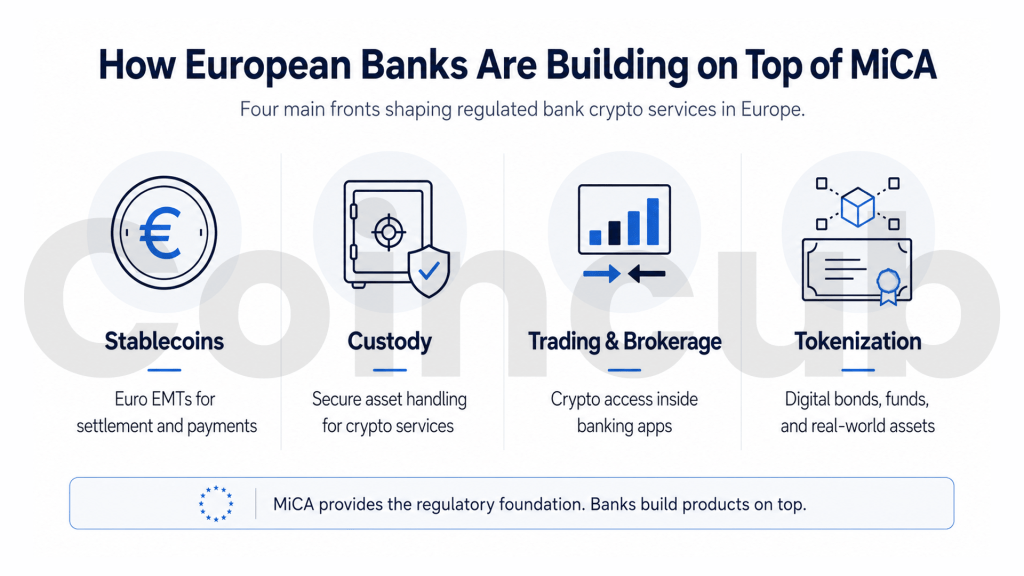
You cannot operate a compliant stablecoin without a legal entity authorized in the EU. For EMTs, this typically means partnering with an existing Electronic Money Institution licensed in an EU member state. If you are an ART issuer, you must apply for authorization from the national competent authority in your home member state, which will then coordinate with the European Banking Authority (EBA). Ensure your entity has adequate governance structures, including a management body with sufficient expertise in digital assets and regulatory compliance.
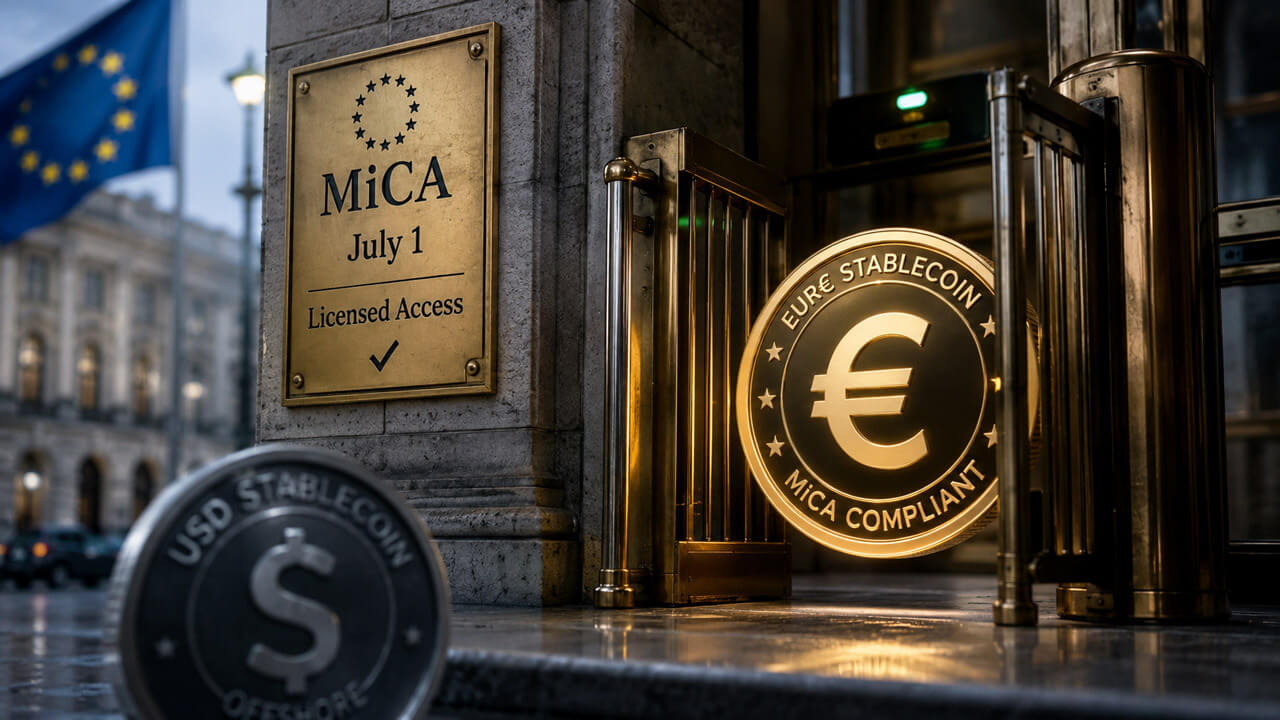
MiCA requires strict segregation of reserve assets from the issuer’s own funds. Reserves must be held in custody by qualified custodians and invested in high-quality, low-risk assets. For EMTs, reserves must cover the outstanding amount of tokens at all times. You must maintain a transparent reporting mechanism to prove that the reserve fully backs the circulating supply. Avoid commingling funds or using illiquid assets like corporate bonds unless they meet specific MiCA criteria for ARTs.
Users must have the right to redeem their stablecoins at par value at any time. Establish a clear, automated redemption process accessible to all holders. Additionally, prepare a White Paper compliant with MiCA Article 22. This document must detail the token’s features, risks, reserve composition, and governance. The White Paper must be notified to your national competent authority before issuance. Regularly update this document as your operations evolve to maintain transparency and regulatory trust.
Compliance is not a one-time setup. You must submit annual reports on your reserve assets and redemption requests to the relevant authorities. Maintain robust anti-money laundering (AML) and counter-terrorist financing (CFT) procedures. Stay updated on guidance from the European Banking Authority (EBA) and the European Securities and Markets Authority (ESMA), as interpretative guidelines may shift as the regulation matures. Non-compliance can result in severe penalties, including suspension of operations.
Mistakes that muddy the sound
Compliance is often treated as a binary switch, but the reality is a spectrum of operational friction. The most common error in 2026 stablecoin compliance is assuming that regulatory approval equals operational readiness. Issuers frequently overlook the granular requirements for reserve segregation and real-time transparency, leading to sudden liquidity freezes or regulatory penalties when audits fail to match on-chain data.
The EU MiCA framework introduces strict distinctions between Asset-Referenced Tokens (ARTs) and E-money Tokens (EMTs). A major pitfall is conflating the two. EMTPs must hold reserves in a single fiat currency and maintain strict peg stability, while ARTs can hold diversified baskets of assets. Misclassifying your token structure can invalidate your entire license application. You must ensure your reserve assets are not only high-quality but also legally ring-fenced from the issuer’s balance sheet to protect holders during insolvency.
Another frequent mistake is neglecting the travel rule for US state-level compliance. While MiCA provides a unified EU standard, US operators must navigate a patchwork of state-level money transmitter laws. Assuming federal preemption will simplify this is dangerous. Many issuers fail to integrate robust KYC/AML checks for every transaction, resulting in blocked withdrawals and frustrated users. The cost of non-compliance is not just fines; it is the loss of user trust.
Finally, many projects treat compliance as a one-time setup rather than an ongoing audit. MiCA requires regular reporting and immediate disclosure of any changes to the reserve composition. Ignoring these reporting deadlines can lead to the suspension of your authorization. Treat compliance as a continuous operational rhythm, not a static checkbox.
Mica stablecoin regulation 2026: what to check next
Readers often confuse stablecoin mechanics with broader crypto asset classifications. These answers clarify the specific regulatory boundaries under EU MiCA and current US legislative status.
No comments yet. Be the first to share your thoughts!