

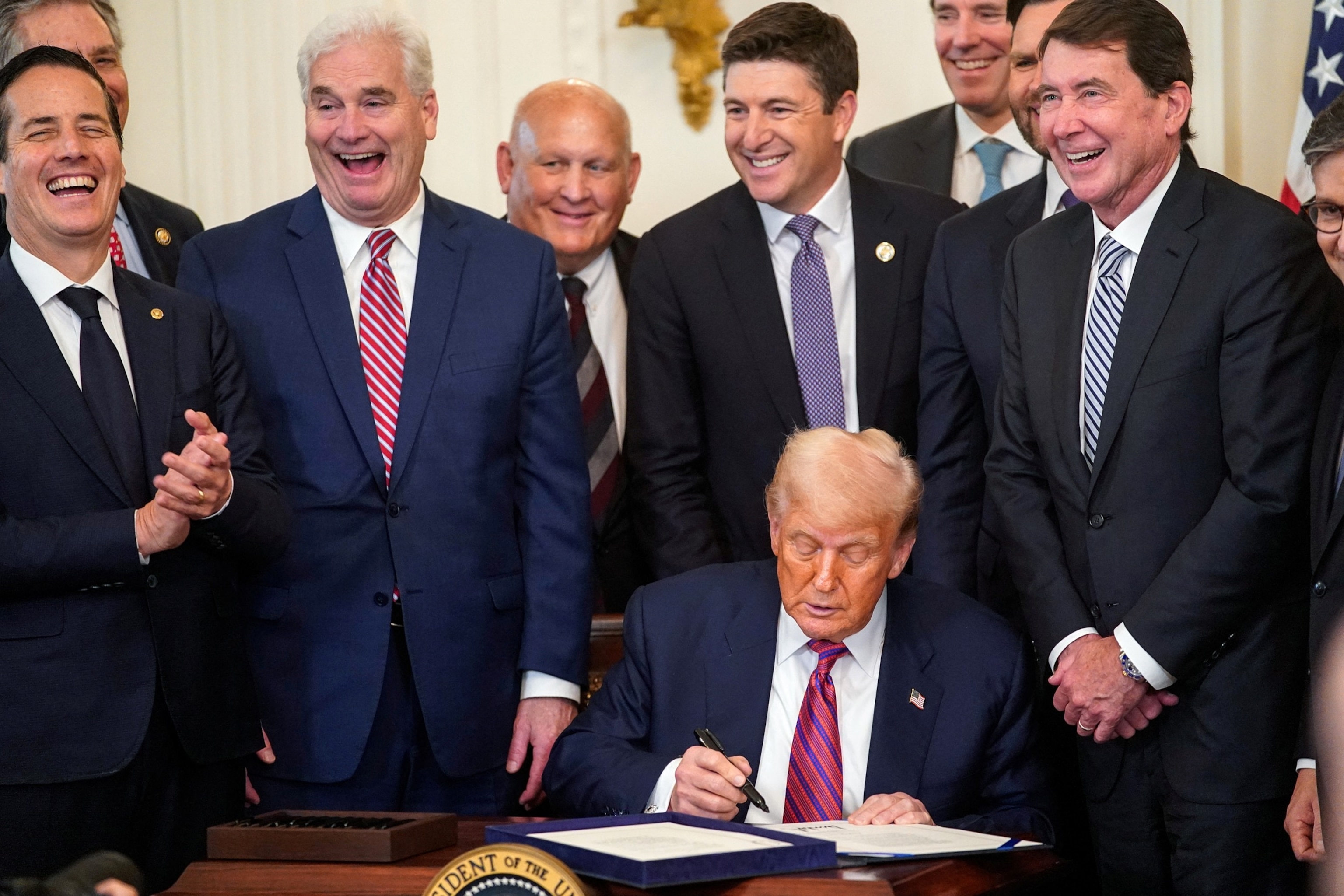
The U. S. regulatory landscape for stablecoins has shifted dramatically with the passage of the Guiding and Establishing National Innovation for U. S. Stablecoins (GENIUS) Act of 2025. This sweeping federal law aims to clarify, unify, and strengthen the rules governing payment stablecoin issuance, reserve management, and consumer protection in the United States. For merchants, issuers, and global payments providers, the GENIUS Act is more than just another compliance hurdle, it could fundamentally reshape how digital dollars move through the economy.
GENIUS Act: Key Regulatory Pillars
At its core, the GENIUS Act introduces a federal licensing regime that restricts issuance of payment stablecoins to three categories of regulated entities: subsidiaries of insured depository institutions, nonbank firms supervised by the Office of the Comptroller of the Currency (OCC), and state-chartered entities under comparable oversight. This marks a decisive end to the era when virtually any tech startup could launch a dollar-pegged token for mass use.
The law’s reserve requirements are equally robust. All permitted issuers must maintain a full 1: 1 reserve backing, meaning every stablecoin in circulation is matched by a U. S. dollar or short-term Treasury security held in segregated accounts. This is designed to prevent destabilizing runs and reinforce user confidence that tokens can always be redeemed at par value.
Crucially, the GENIUS Act also bans interest payments on payment stablecoins. Issuers are prohibited from offering yield or rewards to holders, a move intended to draw a bright line between stablecoins as transactional tools and deposit-like investment products. While this limits product innovation for issuers seeking to attract users with incentives, it aligns with global policy trends prioritizing financial stability over speculative growth.
Implications for Merchants: Stability Meets Compliance
For merchants integrating stablecoins into their payment stack, these regulatory changes bring both opportunity and responsibility. The new framework promises greater stability and reliability: with strict reserve audits and federal oversight in place, merchants can accept compliant tokens with reduced risk of depegging or insolvency events.
The prohibition on interest ensures that these assets remain true payment instruments rather than shadow banking products, a critical distinction for companies navigating complex U. S. financial laws. However, compliance is now non-negotiable; merchants must verify that accepted tokens are issued by fully licensed entities or risk severe legal exposure.
This shift may narrow the universe of eligible tokens but should enhance consumer trust at checkout, potentially accelerating mainstream adoption within retail, e-commerce, SaaS billing, and cross-border B2B commerce. For deeper analysis on merchant compliance strategies under GENIUS Act rules, see our coverage at this detailed guide.
Heightened Barriers, and Opportunities, for Issuers
The GENIUS Act sets a high bar for market entry. Prospective issuers must secure federal or equivalent state licenses and demonstrate ongoing compliance with capital adequacy, liquidity management, AML/KYC controls, and transparent redemption policies. Non-compliance exposes firms not only to regulatory penalties but also criminal liability, a significant escalation from prior regulatory regimes.
This environment favors well-capitalized players able to invest in robust governance structures and regular third-party audits. Smaller startups may find themselves squeezed out unless they partner with licensed banks or OCC-supervised nonbanks, a trend already visible among fintechs seeking compliant onramps for tokenized dollar products.
A New Standard for Global Payments?
The GENIUS Act’s alignment with international frameworks like Europe’s MiCA regulation signals an emerging consensus on what constitutes safe digital money at scale. By mandating 100% reserves in liquid U. S. assets, and requiring rigorous AML/KYC screening, the law positions U. S. -issued stablecoins as trusted rails for cross-border commerce while reducing systemic risk across interconnected financial networks.
For global payment providers, this regulatory clarity could be transformative. With the GENIUS Act’s explicit exclusion of compliant payment stablecoins from the definitions of “security” and “commodity, ” cross-border transactions involving U. S. dollar-backed tokens now face fewer legal ambiguities. This enables smoother settlement, faster reconciliation, and a more predictable compliance environment for multinational merchants and payment processors.
Yet, the Act’s extraterritorial provisions, applying certain requirements to foreign-issued stablecoins circulating in the U. S.: may fragment liquidity or shift non-compliant tokens offshore. As a result, we may see a bifurcation between regulated, transparent stablecoin markets and unregulated alternatives operating at the periphery of the global financial system. For those seeking to operate at scale in regulated markets, adherence to GENIUS Act standards will be non-negotiable.
Audit Transparency and Reserve Assurance
One of the most significant operational changes under the new law is the requirement for regular third-party audits of stablecoin reserves. Issuers must publicly disclose not only reserve balances but also asset composition, ensuring that every $1.00 USDT (the current market price) is fully collateralized by cash or short-term Treasuries as mandated by statute.
This transparency is designed to eliminate uncertainty around redemption risk, which has historically plagued less-regulated issuers. For merchants and institutional users, this means greater confidence that their digital dollars are always redeemable at face value, even during periods of market stress.
What Comes Next? Adaptation and Competitive Dynamics
The GENIUS Act’s impact will reverberate well beyond compliance checklists. With stricter licensing and reserve requirements, expect further consolidation among stablecoin issuers as smaller entities seek partnerships or exit the market altogether. Meanwhile, large financial institutions may enter with their own compliant products, leveraging trust in their brands to capture merchant and retail adoption.
For merchants, due diligence around token acceptance becomes a core operational function, akin to vetting card networks or payment processors today. As regulated stablecoins become more deeply integrated into e-commerce platforms and B2B settlement rails, expect enhanced interoperability with traditional banking infrastructure as well as improved speed and cost-efficiency for global payments.
Practical Considerations for Compliance Teams
- Verify issuer status: Only accept tokens from federally or state-licensed issuers listed on official registries.
- Monitor audit disclosures: Stay updated on third-party audit reports for all accepted tokens; require proof of 1: 1 reserve backing in liquid assets.
- Update AML/KYC protocols: Align onboarding processes with GENIUS Act mandates for customer identification and transaction monitoring.
- Review redemption policies: Ensure that any fees or delays are transparently disclosed to end-users at checkout or settlement.
Looking Ahead: Stablecoin Regulation as a Catalyst
The GENIUS Act’s passage marks a watershed moment for digital asset regulation in the United States. By imposing rigorous standards on issuance, reserves, audits, and consumer protection, and aligning these standards with international frameworks, it paves the way for widespread adoption of stablecoins as trusted digital money in both domestic and cross-border commerce.
The next phase will test how quickly issuers can adapt business models to comply with new rules while continuing to innovate on user experience and integration into merchant payment stacks. For ongoing updates on implementation timelines, enforcement actions, and best practices under federal stablecoin law USA, including detailed guides on licensing requirements, see our resource hub at this link.




No comments yet. Be the first to share your thoughts!