
2026 stablecoin regulations: GENIUS Act and SEC enforcement
The regulatory landscape for digital dollar equivalents shifted significantly in early 2026. The primary framework is now the GENIUS Act, enacted on July 18, 2025, which establishes a federal regulatory structure for payment stablecoin activities. The Office of the Comptroller of the Currency (OCC) issued its first notice of proposed rulemaking in February 2026, outlining specific compliance requirements for issuers [[src-serp-2]].
Simultaneously, the Securities and Exchange Commission (SEC) has intensified enforcement actions against issuers that fail to meet reserve transparency standards. These actions target major players like Tether (USDT) and Circle (USDC), forcing them to adapt their reserve compositions and reporting mechanisms to avoid further legal penalties. The SEC's approach focuses on investor protection and market integrity, ensuring that stablecoins function as true payment instruments rather than unregistered securities.
Market data suggests these regulations are reshaping the industry's scale. Federal Register forecast data indicates an upper bound for payment stablecoin issuance of $500 billion in 2026, up from $250 billion in 2025 [[src-serp-1]]. This growth reflects increased institutional adoption driven by clearer compliance pathways, but it also raises the stakes for regulatory adherence. Issuers must now navigate a dual-track system: federal banking standards under the GENIUS Act and securities enforcement under the SEC. This creates a complex environment where legal compliance is as critical as technological stability.
2026 stablecoin regulations choices that change the plan
The shift from enforcement ambiguity to codified rules under the GENIUS Act changes how issuers and users evaluate risk. Compliance is no longer just about reserves; it is about jurisdictional alignment, reserve composition, and operational transparency. For enterprises and high-value users, the tradeoff is often between the liquidity of established players like USDT and the regulatory clarity of USDC.
Key Regulatory Factors
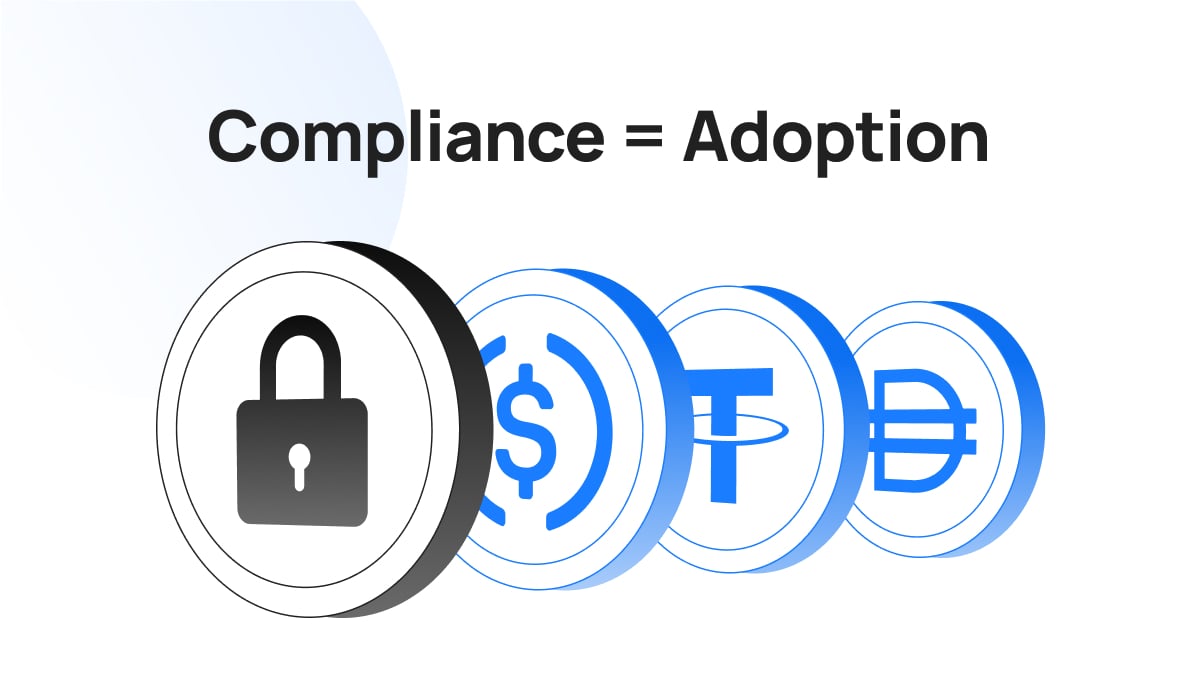
The primary differentiator in 2026 is the legal status of the issuer. USDC (Circle) operates under direct US federal oversight and has integrated with the new GENIUS Act framework, which mandates strict reserve requirements and regular attestation. USDT (Tether) remains largely offshore, with compliance varying by jurisdiction and facing ongoing scrutiny from US regulators regarding reserve transparency. This creates a clear split: USDC offers institutional safety and regulatory predictability, while USDT offers broader cross-border liquidity but higher legal risk.
Reserve composition is the second critical factor. The GENIUS Act requires stablecoin reserves to be held in high-quality liquid assets, primarily short-term US Treasuries and cash. This reduces credit risk but also lowers the yield that issuers can pass on or retain. Older models relying on commercial paper are largely phased out for compliant issuers. Users must verify that their chosen stablecoin adheres to these new reserve standards to avoid exposure to issuer insolvency.
Comparison Table
| Feature | USDC (Circle) | USDT (Tether) | Offshore Stablecoins |
|---|---|---|---|
| Regulatory Status | US Federal Compliant (GENIUS Act) | Mixed (Offshore focus) | Varies by Jurisdiction |
| Reserve Composition | US Treasuries, Cash | Mixed (T-Bills, Commercial Paper) | Varies |
| Transparency | Monthly Attestations | Quarterly Reports | Varies |
| Institutional Acceptance | High | Moderate | Low |
| Cross-Border Liquidity | Good | Excellent | Limited |
Decision Framework
For US-based businesses and institutional users, the tradeoff favors USDC due to its clear regulatory alignment and reserve transparency. The GENIUS Act provides a legal shield that USDT lacks, making USDC the safer choice for compliance-heavy operations. However, for global retail users or those in jurisdictions with limited banking access, USDT’s broader acceptance and liquidity often outweigh the regulatory risks.
The decision should be based on your jurisdiction and risk tolerance. If you are operating within the US or dealing with regulated entities, prioritize issuers with explicit GENIUS Act compliance. For non-US users, evaluate the local regulatory environment and choose an issuer with a strong track record in that specific jurisdiction. Always verify reserve attestations and regulatory status before committing significant capital.
How to Choose the Right Stablecoin for 2026
The SEC’s 2026 enforcement actions have shifted stablecoin selection from a price comparison to a compliance audit. With the GENIUS Act regulations now in effect and the Federal Register outlining new issuance bounds, the margin for error has shrunk. Issuers and users must now prioritize regulatory alignment over market share.
This section provides a practical framework to evaluate USDT, USDC, and emerging compliant issuers. Use these steps to assess risk, liquidity, and legal standing before committing capital.
Check the issuer’s primary regulatory filing. USDC remains the primary choice for US-based entities due to its direct alignment with the GENIUS Act’s proposed rulemaking. USDT operates under a more fragmented regulatory umbrella, which may pose challenges for US-centric compliance reporting. Confirm that the stablecoin is listed in the Federal Register’s proposed rules for 2026.
Review the latest attestation reports. The SEC’s recent actions target issuers with opaque reserve structures. Prefer stablecoins that publish monthly, third-party audited reserves. USDC’s real-time proof-of-reserves model offers higher transparency than USDT’s periodic attestations. For institutional use, this transparency is often a non-negotiable requirement for internal risk committees.
High compliance means little if the asset cannot be converted quickly. Evaluate trading volume across regulated US exchanges. USDC typically dominates on-chain volume for compliant DeFi protocols. USDT retains higher volume on offshore exchanges. If your operations require US-based fiat on-ramps, USDC’s broader exchange support reduces slippage and withdrawal delays.
New enforcement actions often target technical vulnerabilities as much as legal ones. Review the stablecoin’s audit history and bug bounty programs. USDC and USDT both operate on multiple chains, increasing the attack surface. Prefer issuers who offer chain-specific compliance tools, such as address blacklisting capabilities that align with OFAC sanctions. This feature is critical for institutional wallets.

Regulatory compliance often comes with higher operational costs. USDC may carry slightly higher transaction fees on some chains due to its more complex legal wrappers. USDT often offers lower fees, reflecting its leaner operational structure. Calculate the total cost of ownership, including potential legal consultation fees required to justify holding a non-USDC stablecoin.
Spotting Weak Compliance Options
The SEC’s 2026 enforcement wave targets issuers who treat compliance as an afterthought. Many stablecoins still rely on outdated reserve structures or vague transparency reports that no longer satisfy regulators. The GENIUS Act, enacted in July 2025, now requires rigorous proof of liquidity and regular audits for payment stablecoins. Issuers ignoring these shifts risk immediate delisting or legal action.
Watch for two common failures: opaque reserve disclosures and delayed audit submissions. The Federal Register’s March 2026 proposed rule emphasizes that $250 billion in issuance by 2025 was already a warning sign of insufficient oversight. If an issuer cannot produce a certified, real-time reserve report, it is likely non-compliant. Avoid platforms that offer vague assurances instead of concrete data.
The market is shifting toward transparency. Only issuers with clear, audited reserves and strict adherence to the GENIUS Act will survive the new enforcement landscape. Focus on projects that publish weekly reserve attestations and engage with regulators proactively rather than reactively.
2026 stablecoin regulations: what to check next
The regulatory landscape for digital dollars has shifted from theoretical frameworks to active enforcement. With the SEC’s new actions and the implementation of the GENIUS Act, clarity is emerging around compliance, reserve requirements, and the future role of stablecoins in the global economy.
Here are direct answers to the most common questions regarding 2026 stablecoin compliance.
No comments yet. Be the first to share your thoughts!