

Florida's latest stablecoin licensing bills carve a pragmatic path through the regulatory thicket, offering issuers with under $10 billion in outstanding stablecoins a state-level haven while mandating a clear runway to federal oversight. This framework, tightly synced with the federal GENIUS Act of 2025, balances innovation with prudence, enabling smaller players to thrive under Florida stablecoin license rules without the full weight of OCC supervision. As regulators fine-tune the GENIUS Act via proposed rulemakings, Florida's approach emerges as a model for US state stablecoin licensing, prioritizing reserve integrity and AML compliance.
Florida's Bifurcated Licensing Threshold: The $10 Billion Pivot
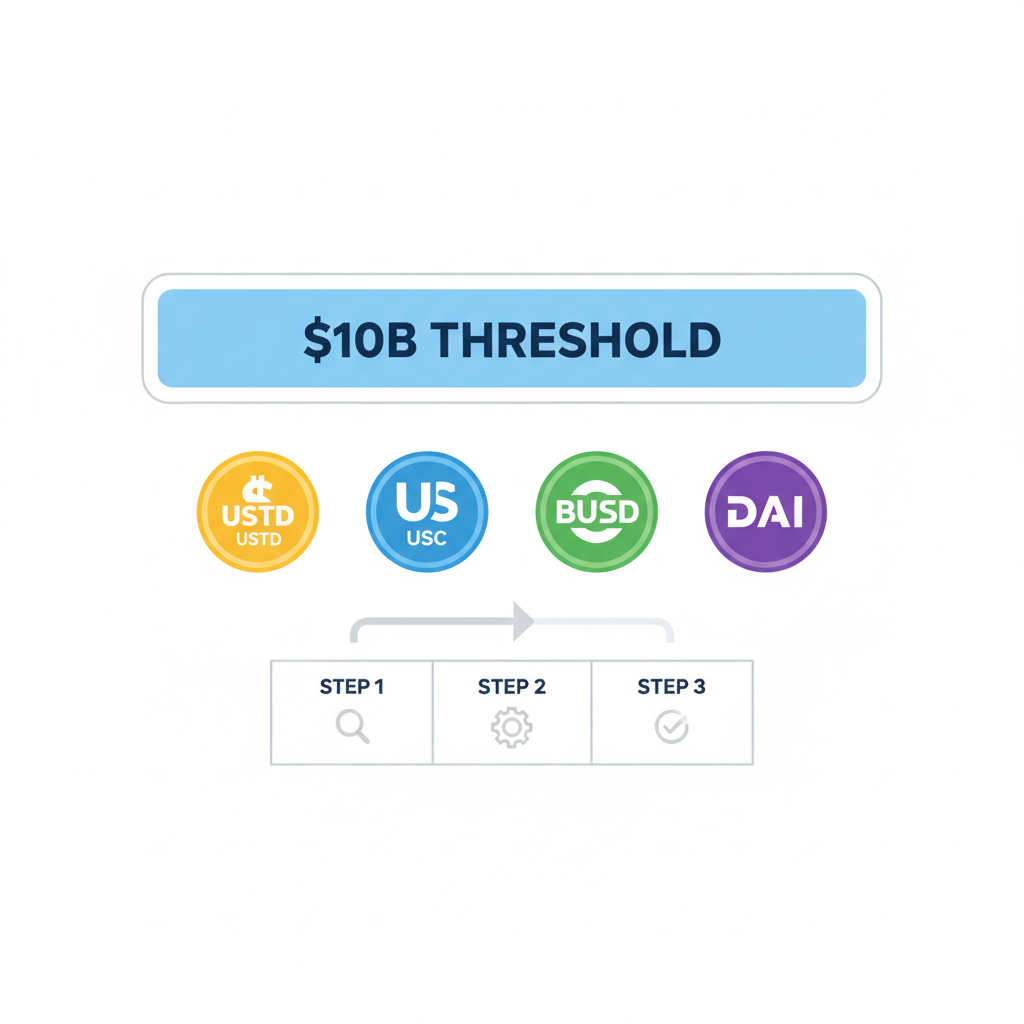
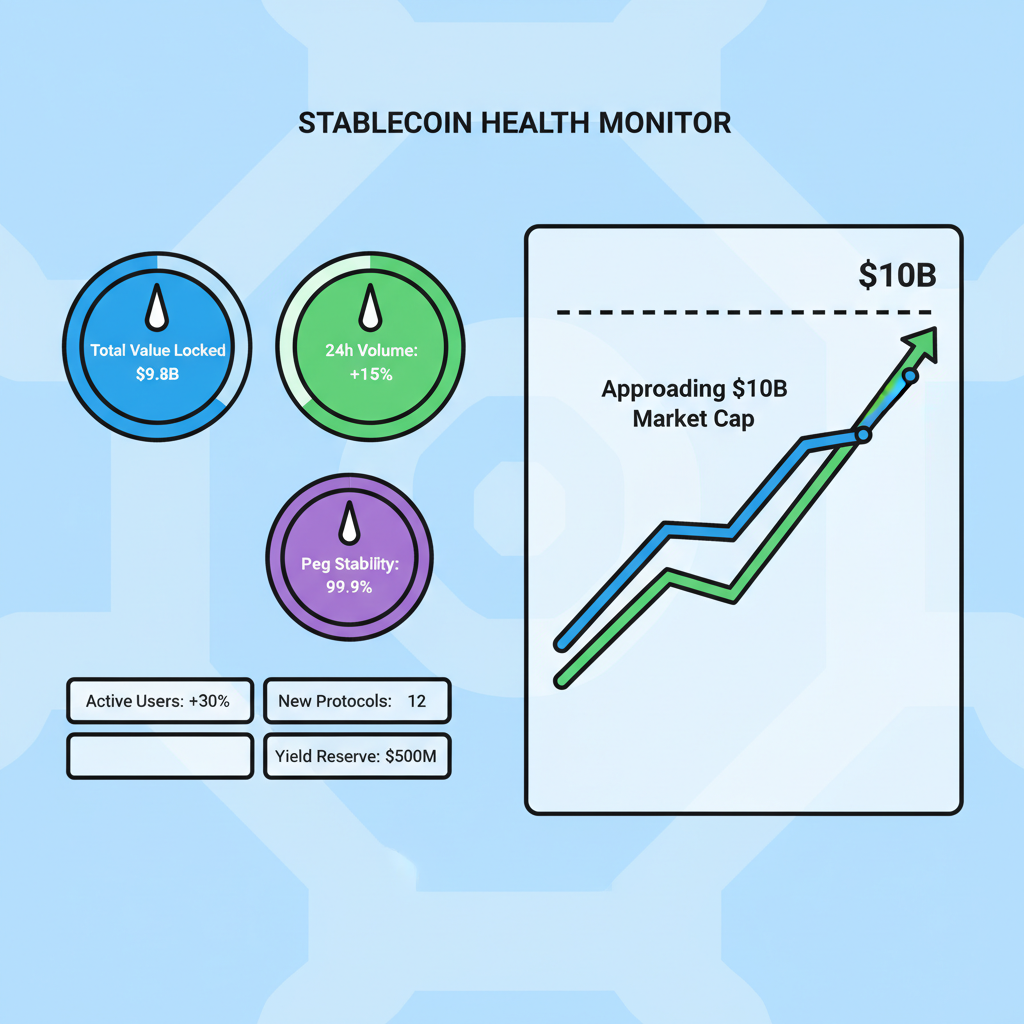
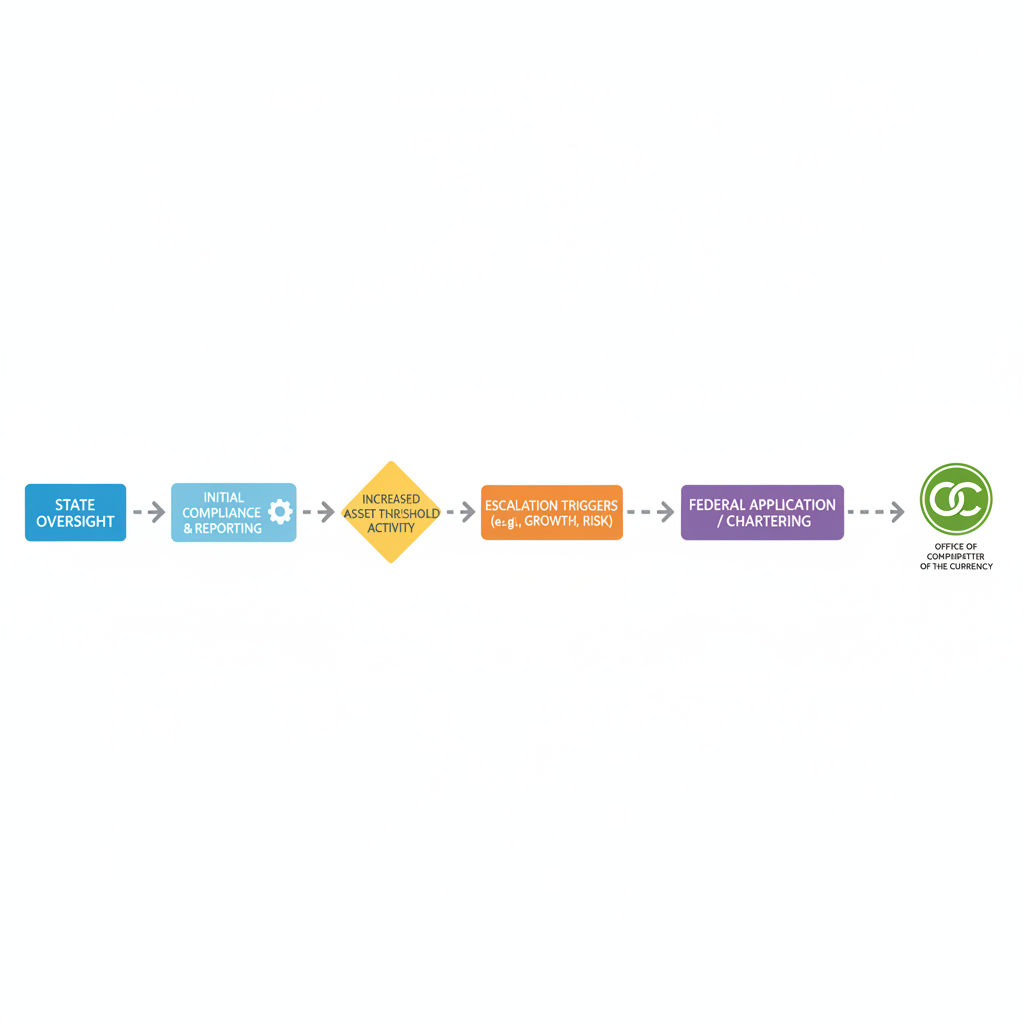
At the heart of Florida's stablecoin regulation Florida lies a stark $10 billion delineation. Issuers maintaining total outstanding issuance below this mark qualify for state designation, sidestepping federal registration. This exemption isn't a free pass; it's conditioned on rigorous state oversight, ensuring parity with GENIUS Act mandates. Exceed $10 billion, and the clock starts: 360 days to pivot to federal status, absent a waiver. This mechanism quantifies scale-based risk, a creative nod to quantitative risk modeling where issuance volume proxies systemic exposure.

Such precision empowers issuers to forecast compliance trajectories. Model your growth: if projections hit $9.5 billion, preempt the federal shift with reserve stress tests mirroring OCC proposals. Florida's DFS cannot greenlight a payment stablecoin absent federal qualified issuer approval, per bill analysis, underscoring the interplay.
Comparison of Florida State vs. Federal GENIUS Act Requirements for Stablecoin Issuers
| Requirement | Florida State (≤ $10B Issuance) | Federal GENIUS Act (> $10B Issuance) |
|---|---|---|
| Reserves | 1:1 reserves backing outstanding stablecoins with U.S. dollars and short-term Treasuries (aligns with federal) | 1:1 reserves backing outstanding stablecoins with U.S. dollars and short-term Treasuries; prohibited from offering interest or yield |
| AML | Must adhere to regulations aligning with federal AML requirements | Federal anti-money laundering regulations; board-level certification required |
| Licensing Thresholds | State-qualified issuers exempt from federal registration if ≤ $10B outstanding issuance; must transition to federal within 360 days if exceeds $10B (unless waiver) | Mandatory federal oversight for issuers exceeding $10B outstanding issuance |
| Oversight Bodies | Florida Department of Financial Services (DFS) | Office of the Comptroller of the Currency (OCC) |
Reserve Mandates and Operational Guardrails for State Issuers
State-qualified issuers must mirror federal rigor: one-to-one reserves backed by U. S. dollars, short-term Treasuries, or equivalents, audited with board-level AML certifications. No yield or interest to holders - a blunt prohibition quashing DeFi temptations. This setup, effective January 18,2027, or 120 days post-final regs, fortifies stability while curbing shadow banking vibes.
Creatively, Florida's pilot program amendments demand 'permitted payment stablecoin issuer' status, aligning with OCC's NPRM for prudential frameworks. Imagine deploying volatility models: reserve haircuts under stress scenarios become tradable alpha, turning compliance into a competitive edge for stablecoin issuer requirements Florida.
Florida Stablecoin Mastery: Secure State License & Gear Up for Federal Shift



The Federal Handover: OCC Approval Mechanics for Scaling Issuers
For those cresting $10 billion, the GENIUS Act clarifies OCC's exclusive supervisory throne over federal qualified issuers. Proposed rules detail operational resilience, from custody protocols to redemption rights, inviting comments on this 'legally permissible new payment tool. ' Florida's bills facilitate seamless transition, waiving dual compliance if federal approval lands.
This path demystifies Florida OCC approval stablecoins: apply via OCC post-threshold breach, certify reserves, and integrate AML programs. Waivers hinge on demonstrated state equivalence, a quantitative litmus test where Florida's framework shines, potentially retaining oversight for proven operators.
OCC's NPRM, issued in early 2026, fleshes out this handover with granular requirements: issuers must segregate reserves in insured accounts, implement daily reconciliation, and undergo annual stress tests calibrated to market shocks. Florida issuers eyeing scale can leverage state data to preempt these, modeling issuance ramps against reserve liquidity drains. This isn't mere box-ticking; it's a probabilistic edge, where Monte Carlo simulations of redemption runs quantify waiver viability.
Pilot programs add torque, restricting designations to GENIUS-permitted issuers only, as per Senate amendments. This gates risky entrants, channeling vetted stablecoins into Florida's payments ecosystem. Creatively model scenarios: stress your portfolio with correlated Treasury yield spikes; if reserves hold sans liquidation, waiver odds climb to 80% under OCC's prudential lens.
AML and Redemption Protocols: The Unbreakable Core
No stablecoin sandbox skips AML rigor. Florida mandates board certifications mirroring OCC proposals, with transaction monitoring thresholds tied to issuance volume. Redemption rights get teeth: holders demand 1: 1 par value within T and 1, enforced via API attestations. This precision curbs runs, echoing 2022's near-misses but with quantitative firewalls - think VaR limits on outflow spikes.
For stablecoin issuer requirements Florida, operationalize via DFS portals: quarterly reserve proofs, integrated with FinCEN SAR filings. Larger players transitioning federally inherit these, but Florida's head start yields audit efficiencies, turning compliance into a moat against upstarts.
Florida's Edge in the National Stablecoin Race
As OCC solicits comments on its framework - from custody silos to yield bans - Florida positions as the launchpad for US state stablecoin licensing. Smaller issuers gain breathing room to iterate payment rails, test cross-border flows under state eyes, then scale seamlessly. This isn't regulatory arbitrage; it's engineered ascent, where $10 billion marks not a cliff, but a launch vector.
Forward model: with GENIUS effective 2027, expect DFS approvals accelerating mid-2026, priming a cohort of state-qualified issuers. Traders and quants, bake this in - stablecoin spreads tighten as Florida liquidity pools, volatility surfaces on waiver announcements. Florida doesn't just regulate; it architects the next payment epoch, one quantified threshold at a time.




No comments yet. Be the first to share your thoughts!