
Prerequisites for stablecoin compliance
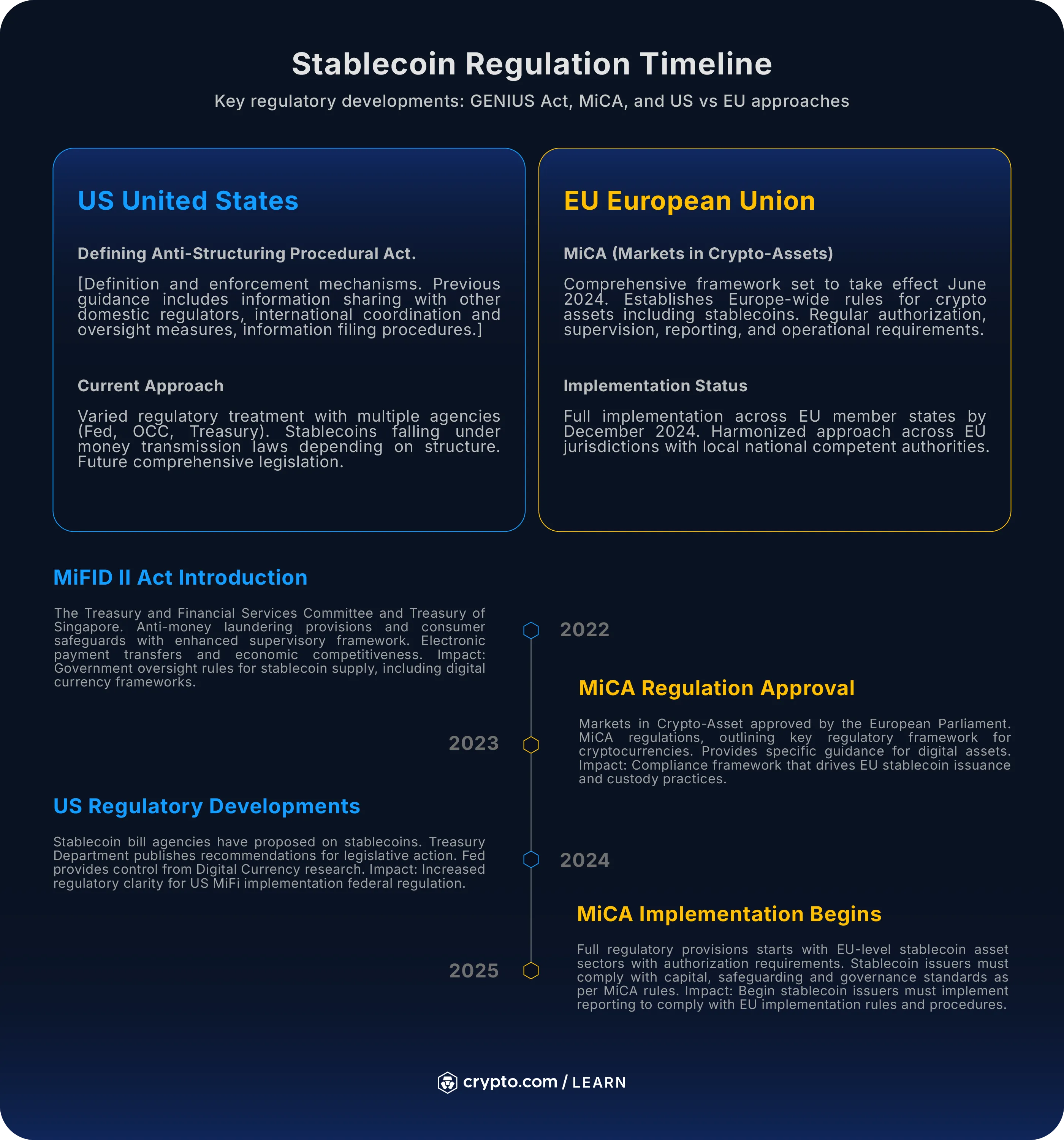
Before addressing the EU’s MiCA final rules or US state laws, issuers must align their foundational architecture with the GENIUS Act framework. Enacted on July 18, 2025, this federal statute establishes the baseline for payment stablecoin activities [[src-serp-2]]. The Treasury’s proposed rulemaking further details the regulatory expectations, requiring issuers to demonstrate readiness across three critical areas: reserve transparency, operational resilience, and consumer protection protocols [[src-serp-1]].
Your first step is to verify that your reserve assets meet the strict liquidity and segregation standards outlined in the GENIUS Act. Unlike previous self-reporting models, the new framework demands real-time attestations and independent audits. Ensure your legal entity is registered in a jurisdiction that allows for cross-border regulatory cooperation, as MiCA and US state laws often intersect in ways that require dual compliance mechanisms.
Finally, map your existing smart contract infrastructure against the new technical standards. Many legacy systems fail to meet the updated transaction monitoring requirements. Conduct a gap analysis now to identify where your current protocols fall short of the GENIUS Act’s operational resilience mandates. This proactive assessment prevents costly retrofits once the final rules take effect.
Place the mic step by step
Stablecoin Compliance works best as a clear sequence: define the constraint, compare the realistic options, test the tradeoff, and choose the path with the fewest hidden costs. That order keeps the advice usable instead of decorative. After each step, pause long enough to check whether the recommendation still fits the reader's actual situation. If it depends on perfect timing, unusual access, or a best-case budget, include a simpler fallback.

Mistakes That Muddy the Sound
Compliance failures rarely stem from malicious intent. They usually come from sloppy execution. When a stablecoin issuer misaligns its reserves, reporting, or disclosure, the result is a loss of trust that no amount of marketing can fix. Below are the common errors that derail compliance efforts under MiCA and the US GENIUS Act framework.
Ignoring Reserve Segregation
One of the most frequent errors is commingling stablecoin reserves with operational funds. Under the GENIUS Act, payment stablecoins must hold reserves in segregated accounts that are legally insulated from the issuer’s bankruptcy estate. Mixing funds creates a direct conflict of interest and exposes users to credit risk. The OCC’s proposed rulemaking emphasizes that these reserves must be held in high-quality liquid assets, typically short-term US Treasuries or cash in regulated banks. If your reserves are pooled with general corporate treasury, you are not compliant. This is not a technicality; it is the core safeguard for the asset.
Overlooking the “Notice of Proposed Rulemaking” Deadlines
Many issuers focus solely on the final text of MiCA but ignore the evolving US landscape. The Treasury Department’s recent proposal to implement the GENIUS Act introduces new reporting requirements for reserve composition and redemption rights. Missing the comment periods or failing to adjust internal controls to match the proposed rules can leave you unprepared when the final regulations drop. Treat the proposed rules as the de facto standard for now. Align your legal counsel’s roadmap with these drafts, not just the older statutes.
Ambiguous Redemption Disclosures
MiCA requires clear, accessible information about how users can redeem their tokens for fiat currency. A common mistake is burying redemption terms in lengthy terms of service documents. Regulators expect this information to be prominent and easy to understand. If a user cannot find out how to convert their stablecoin back to euros or dollars within a reasonable timeframe, your issuer is at risk of enforcement action. Simplify your disclosure pages. Make the redemption process a feature, not a footnote.
2026 stablecoin regulations: what to check next
Stablecoin issuers face a complex web of rules as the EU’s MiCA final rules and US state laws take shape. Below are the most common practical questions regarding compliance in 2026.
No comments yet. Be the first to share your thoughts!